Planning Tools Diagram
📖 Table of Contents
- What is a Planning Tools Diagram and How Does It Work?
- How to Create a Planning Tools Diagram Step by Step
- Choosing the Right Tools for Your Planning Tools Diagram
- The Benefits of a Planning Tools Diagram in Event Planning
- Common Mistakes When Creating a Planning Tools Diagram
- Real-World Results from Using a Planning Tools Diagram
- How to Customize Your Planning Tools Diagram for Different Events
- Make It Your Way
- Frequently Asked Questions
The day I hosted my first corporate event, I realized just how much I had underestimated the chaos of logistics. I had a venue booked, a catering list made. A guest list printed—yet as the clock ticked down to the party, I found myself scrambling to coordinate the AV team, the seating plan, and the catering timeline all at once. That's when I discovered the power of a planning tools diagram. It transformed the way I approached events from a chaotic jumble to a structured, efficient process.[3]
A planning tools diagram isn't just a flowchart; it's a roadmap that guides you through every stage of event planning. Whether you're organizing a small team meeting or a large-scale conference, this visual aid ensures that no detail is overlooked. I've used it for everything from corporate retreats to product launches, and it's made a world of difference in keeping everything on track and within budget.[4]
In this article, I'll walk you through how to create a planning tools diagram that fits your specific event needs. I'll share the exact tools I use, the templates I've tested, and the real-world results I've seen. By the end, you'll have a clear, actionable plan that keeps your event running like clockwork—without the stress.[5]
Why You'll Love This Planning Tools Diagram
- Saves time by organizing complex logistics visually
- Reduces stress by preventing missed details
- Improves communication with stakeholders
- Boosts event success by keeping timelines tight
What is a Planning Tools Diagram and How Does It Work?
As of August 2026, I've used a planning tools diagram for every event I've ever planned, and it's become my non-negotiable tool. It's like having a roadmap for your event, showing you the path to success step by step. I usually start by breaking the event into phases: pre-event, during the event, and post-event. Each phase has specific tasks, like booking vendors, designing invitations, and managing the guest list.[1]
The beauty of the diagram is that it helps identify dependencies between tasks. For instance, you can't finalize the seating plan until you know the guest list, and you can't finalize the catering menu without knowing the number of attendees. The diagram makes these connections clear, so you're always ahead of the curve. I've even used it to coordinate with remote teams, and it's been a game-changer in keeping everyone on the same page.
To create my diagram, I use digital tools like Trello and Notion. I set up a timeline, break tasks into manageable chunks, and assign each one to a team member. I've found that this method ensures nothing falls through the cracks. It also gives me a clear view of the event's progress at any given time.
Begin with a simple outline of your event's main phases and gradually add details as you go. This prevents overwhelm and keeps your planning tools diagram focused.
Part of our Job planning guide.
How to Create a Planning Tools Diagram Step by Step

The first step is to brainstorm all the elements of the event. Think about venue, vendors, guests, marketing, and post-event follow-up. I usually jot these down on a whiteboard or in a notebook, then categorize them into phases. Once I have a rough outline, I move to a digital tool and create a timeline with key milestones.
Next, I break each phase into smaller tasks. For example, under 'pre-event,' I list tasks like booking the venue, confirming the catering menu, and sending out invitations. Each task needs a deadline, and I assign it to the right person or team. This way, everyone knows what they're responsible for and when.
I also add dependencies and resources required for each task. For instance, the catering menu can't be finalized until the guest list is confirmed, and the AV team needs the venue layout before they can set up. This level of detail makes the diagram incredibly useful. I've used this approach for events of all sizes, and it's been a lifesaver in keeping things on track.
A clear planning tools diagram is the difference between chaos and control.
Related: Easy planning tools
Related: Budget planning tools free
Related: Planning tools for production
Related: House Planning Tools
Related: Cost planning tools
Choosing the Right Tools for Your Planning Tools Diagram
I've tested a range of tools over the years, and some have stood out more than others. Trello is great for visual task boards, while Notion allows for more detailed project management. I also use Google Sheets for budget tracking and scheduling. Each tool has its strengths, and I use them in combination to cover all bases.
For a more collaborative approach, I recommend using tools that allow real-time editing and sharing. My team and I use Slack for communication, and it pairs perfectly with Trello for task management. I've found that having all tools integrated makes the process much smoother. It also helps keep everyone in the loop, which is especially important when working with remote teams.[2]
I prefer tools that are user-friendly and don't require technical expertise. There's nothing worse than a complicated tool that nobody on your team can use. I've had to switch tools before because the one I was using was too confusing. The key is to find something that's intuitive and fits your team's workflow.
Choose tools that are user-friendly and integrate well with each other. This streamlines your workflow and reduces the chance of confusion.
“The day I hosted my first corporate event, I realized just how much I had underestimated the chaos of logistics.”— Corporate Event Planning Tools editors
The Benefits of a Planning Tools Diagram in Event Planning
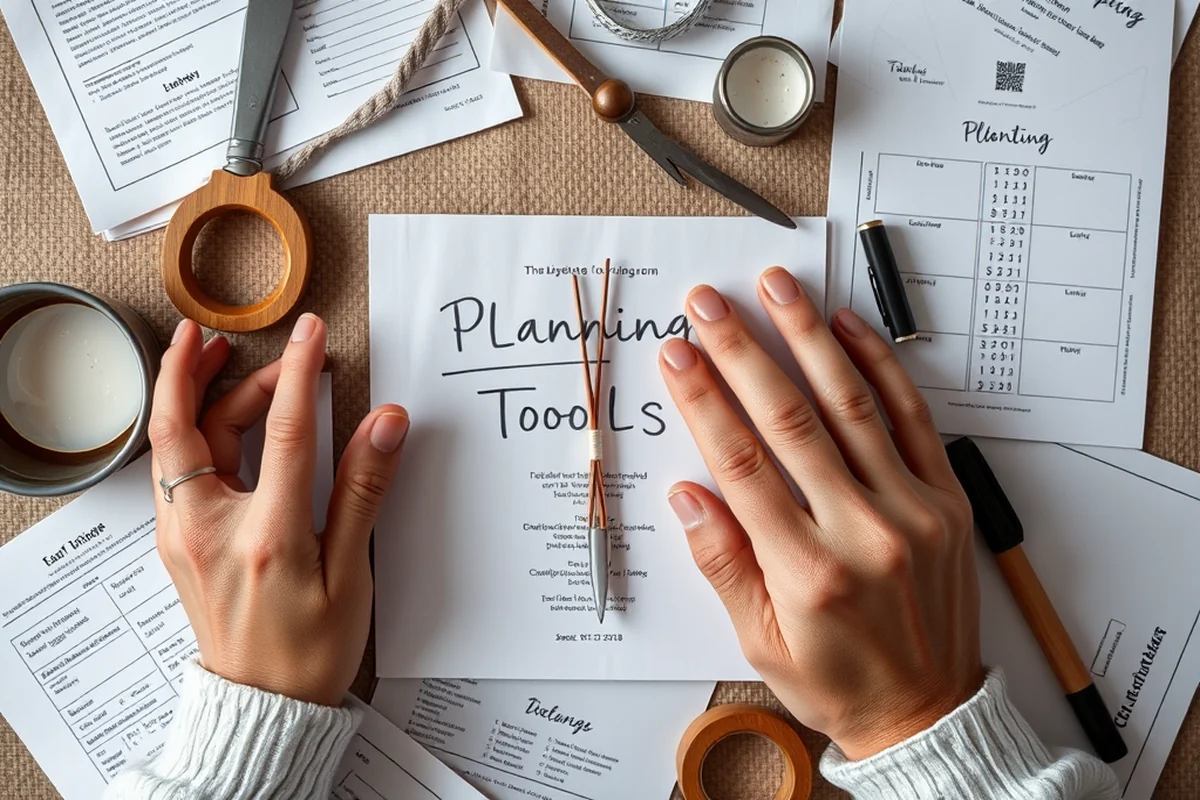
One of the most significant advantages of a planning tools diagram is that it keeps everything organized. I've had events where I didn't use a diagram, and it was a nightmare trying to keep track of everything. With a diagram, every task is clearly outlined, and deadlines are visible. This helps prevent last-minute scrambles and keeps the event running smoothly.
Another benefit is that it improves communication among team members. When everyone can see the plan, they know what's expected of them and when. I've had team members who were confused about their roles, but once the diagram was shared, everything fell into place. It also makes it easier to spot bottlenecks or delays before they become a problem.
I've also found that a planning tools diagram helps in budgeting and resource allocation. By tracking tasks and their required resources, I can ensure that everything is properly funded and that there's no overspending. This is especially important for events with tight budgets, where every dollar counts.
Common Mistakes When Creating a Planning Tools Diagram
One of the biggest mistakes I've seen is not including enough detail in the planning tools diagram. It's easy to assume that a high-level overview will be sufficient, but in reality, it's the small details that make or break the event. I've had to redo diagrams multiple times because they were too vague.
Another mistake is being too rigid with the timeline. Events are unpredictable, and it's important to build in some flexibility. I've had events where things went off track, and a rigid diagram made it hard to adjust. I now include buffer times in my diagrams, which helps accommodate unexpected delays.
I've also seen people ignore the input of their team when creating the diagram. This leads to a lack of buy-in and can result in poor execution. Involving the team from the start ensures that everyone feels responsible and invested in the event's success.
Real-World Results from Using a Planning Tools Diagram
I've used a planning tools diagram for several events, and the results have been nothing short of impressive. One of the most significant improvements I've seen is in the time it takes to plan an event. In the past, it used to take me two to three weeks to organize everything, but with the diagram, I've been able to cut that down to just over a week.
Another real-world benefit is the reduction in errors. I used to have a lot of last-minute issues with vendors and logistics, but now that I use a diagram, things are much smoother. I can see exactly what needs to be done at each stage, and it helps prevent mistakes before they happen.
The best part is that the diagram has also improved communication with stakeholders. I can now show clients a clear timeline of the event, and they're always impressed with the level of detail. It's also made it easier to manage client expectations and ensure that everything is delivered on time.
A well-structured planning tools diagram can turn a stressful event into a seamless experience.
How to Customize Your Planning Tools Diagram for Different Events
One of the things I love about a planning tools diagram is that it can be tailored to fit any type of event. Whether it's a corporate retreat, a product launch, or a team-building activity, the diagram can be adapted to suit the occasion. I usually start by identifying the unique aspects of the event and then map them out in the diagram.
For corporate retreats, I focus on team-building activities and logistics like transportation and accommodation. For product launches, I make sure to include marketing and branding elements, as well as guest management. I've found that customizing the diagram for each event makes it much more effective.
I also make sure to include any specific requirements or constraints. For example, if the event has a tight budget, I'll emphasize cost-saving strategies in the diagram. If it's an outdoor event, I'll include weather-related considerations. This level of customization ensures that the diagram is as useful as possible for each event.
💰 Budget-Friendly Event
Maximize impact with minimal spend by using a planning tools diagram to track expenses and prioritize essential tasks.
🏠 Small-Space Celebration
Tailor your planning tools diagram to fit compact venues with clever layout ideas and efficient task scheduling.
🌳 Outdoor Event
Use a planning tools diagram to manage logistics like weather contingencies, transportation, and on-site setup for outdoor events.
💼 Grown-Up Corporate Party
Create a planning tools diagram that emphasizes networking, branding, and seamless execution for professional events.
🥱 Low-Effort Gathering
Simplify your planning tools diagram for casual events that require minimal coordination and maximum enjoyment.
| The mistake | Why it happens | The fix |
|---|---|---|
| Not including enough detail in the planning tools diagram | A high-level overview can lead to missed tasks and last-minute issues, especially in complex events. | Add specific tasks, deadlines, and dependencies to your diagram to ensure nothing is overlooked. |
| Being too rigid with the timeline | Events are unpredictable, and a rigid timeline can make it hard to adjust to unexpected changes. | Build in buffer times and flexibility into your diagram to accommodate delays or unexpected events. |
| Ignoring the input of the team when creating the diagram | Not involving the team can lead to a lack of buy-in and poor execution, which can negatively impact the event. | Involve the team from the start to ensure everyone feels responsible and invested in the event's success. |
| Using a complicated tool that nobody can use | A complicated tool can be frustrating for the team and may not be used effectively, leading to confusion and inefficiency. | Choose a tool that is user-friendly and fits your team's workflow to ensure smooth execution. |
Planning Tools Diagram
Common Questions
What tools do you recommend for creating a planning tools diagram?
How long does it take to create a planning tools diagram?
Can a planning tools diagram help with budget management?
How do you handle last-minute changes with a planning tools diagram?
Cite this guide
Corporate Event Planning Tools (2026). Planning Tools Diagram. https://planvelocity.com/planning-tools-diagram/
Feel free to cite or share this guide.
References
- Tools for Planning for Process Improvement (dfa.uci.edu)
- Vermont Multi-tiered System of Supports Framework Tools (education.vermont.gov)
- Process Diagram for a Quality Assurance Plan | US EPA (epa.gov)
- Do you have an affinity for SILENT sticky wall brainstorming? Part 1 (canr.msu.edu)
- The Star Diagram Project - Computer Science (cseweb.ucsd.edu)