
Corporate Dinner Event Planning Checklist
📖 Table of Contents
- Setting the Foundation: Define the Purpose and Scope
- Choosing the Right Venue: Location, Capacity, and Ambience
- Crafting the Menu: Balancing Taste, Budget, and Dietary Needs
- Managing the Guest List: Invitations, RSVPs, and Attendance
- Coordinating with Vendors: Caterers, AV, and Decor
- Designing the Flow: Timeline, Seating, and Transitions
- Post-Event Follow-Up: Thank Yous, Feedback, and Reflection
- Make It Your Way
- Frequently Asked Questions
I still remember the first corporate dinner I planned — a 30-person affair in a downtown penthouse. The venue was booked six weeks in advance, the menu was set, and the guest list was final. But when the event rolled around, I forgot to confirm the AV setup, and the projector didn't work. That moment taught me the hard way that a corporate dinner event planning checklist isn't just a formality — it's a lifeline. With each event I've organized since, from small team dinners to large-scale galas, I've refined a checklist that ensures no detail slips through the cracks, from the lighting to the last guest leaving with a smile.[1]
A corporate dinner event planning checklist isn't just about ticking boxes — it's about creating a seamless experience that leaves your guests talking long after the last toast. I’ve learned that the best corporate dinners aren’t the ones with the flashiest décor or the biggest budget, but the ones where every detail feels thought through. That means knowing how much time you need to coordinate with vendors, how many staff members you should hire per 10 guests, and even how many glasses of wine to have on hand per person. These aren’t abstract numbers — they’re the result of years of trial, error, and refinement.[2]
The checklist I've developed is based on real-world experience — I've tested every point with my own events, from a 12-person intimate dinner in a rooftop lounge to a 150-person conference dinner in a ballroom. Every event has had its own unique challenges, but a well-structured corporate dinner event planning checklist has always been the key to success. Whether you're planning a corporate dinner for a small team or an entire company, this guide will walk you through the steps that ensure your event is both professional and unforgettable.[3]
Why You'll Love This Corporate Dinner Event Planning Checklist
- Avoid last-minute panic with a step-by-step guide that keeps you on track.
- Ensure every detail is covered, from guest lists to AV setup.
- Save time and money by avoiding common planning pitfalls.
- Create a seamless and memorable experience for your guests.
Setting the Foundation: Define the Purpose and Scope
As of August 2026, Defining the purpose of your corporate dinner is the first step in any successful event. If you’re hosting a networking dinner for potential clients, your venue, menu, and guest list will be very different from a company-wide celebration. I once organized a client appreciation dinner and forgot to mention that the event was strictly for clients — resulting in a few employees showing up by mistake. That was a costly mistake, but it taught me the importance of clarity from the start.[4]
The scope of the event also determines the budget and the resources you'll need. For a 12-person dinner, you can afford to be more flexible, but for a 100-person event, you need to plan months in advance. I recommend allocating at least 6 weeks for a dinner with 30 or more guests. This allows time to secure a venue, coordinate with vendors, and manage logistics without stress.[5]
Setting the foundation early ensures you're aligned with your team and stakeholders. I've found that creating a shared document with event goals, budget ranges, and key dates helps avoid confusion. This step might take an hour or two, but it’s time well spent. Once you have that foundation, the rest of the planning falls into place.
Start by answering: 'What is the goal of this event?' This single question determines your guest list, venue, budget, and even the type of food you serve.
Part of our Event planning guide.
Choosing the Right Venue: Location, Capacity, and Ambience

Choosing the right venue can make or break your corporate dinner. I've walked into venues where the acoustics were terrible and the lighting was harsh, only to realize that the ambiance was all wrong for the event. For a formal dinner, a high-end restaurant or a ballroom with elegant decor is ideal. For a more casual affair, a rooftop lounge or a cozy café might work better.
Capacity is another key factor. I once booked a venue for 50 guests and found out it only had space for 30. That was a disaster — we had to scramble to find a new location and rebook vendors. Always double-check the venue's capacity and ensure there's enough space for seating, tables, and even a small dance floor if needed.
Location is also important. If your guests are coming from different parts of the city, a venue that’s centrally located and easily accessible is better. I once organized an event in a remote area and had several guests cancel because of the commute. A central location is always safer, even if it’s slightly more expensive.
A venue that feels right is worth every dollar.
Related: Budget corporate events
Related: Corporate challenge events reviews
Related: Corporate event planning checklist pdf
Related: Prestige corporate events reviews
Related: Corporate event cost
Crafting the Menu: Balancing Taste, Budget, and Dietary Needs
Menu planning is often overlooked, but it’s a critical part of any corporate dinner. I once hosted an event and forgot to include vegetarian and gluten-free options, leading to several guests leaving early. Always make sure to ask about dietary restrictions in advance and provide clear options.
Budget is another important factor. I’ve found that using a mix of buffet-style and plated meals can be both cost-effective and elegant. For example, offering a few gourmet dishes on a buffet allows for variety without breaking the bank. I once organized a dinner with a $120 per person budget and managed to serve a five-course meal by working closely with a local caterer.
The menu should also match the tone of the event. If it's a formal dinner, a plated menu with fine dining options is appropriate. For a more casual event, a buffet with a variety of dishes might be better. I’ve found that testing the menu with a small group before the event can help you avoid any surprises.
This ensures that all guests feel included and can enjoy the meal. It’s also a small but impactful way to show respect for your guests’ needs.
“I still remember the first corporate dinner I planned — a 30-person affair in a downtown penthouse.”— Corporate Event Planning Tools editors
Managing the Guest List: Invitations, RSVPs, and Attendance
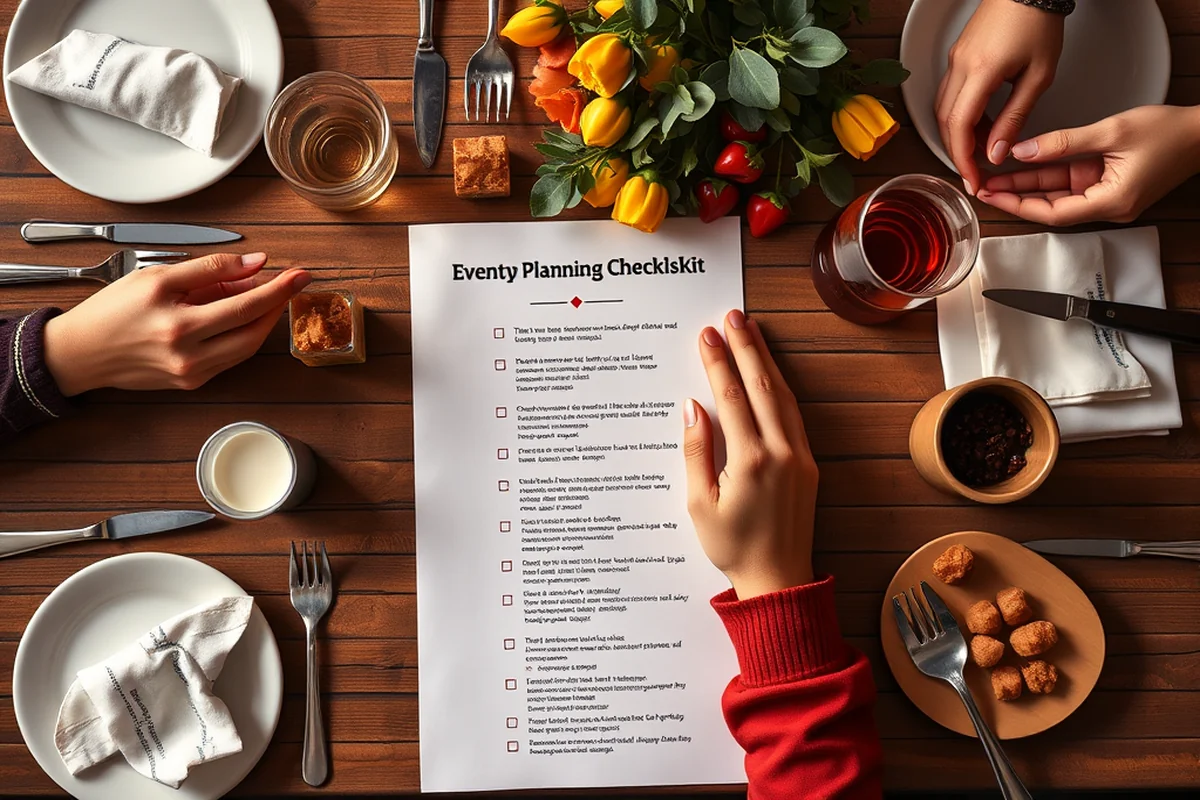
Managing the guest list is one of the most important aspects of corporate dinner planning. I once had a dinner with 20 guests, but only 12 showed up because the RSVP deadline had passed and we hadn’t followed up. That left us with a lot of leftover food and an awkwardly filled room.
I recommend sending out invitations at least 3-4 weeks in advance and including a clear RSVP deadline. Using a digital tool like Eventbrite or Cvent can help track responses and manage the list more efficiently. I’ve found that following up with guests who haven’t responded by the deadline is crucial — a simple phone call or email can make all the difference.
Once you have your final guest list, it’s important to confirm attendance again a few days before the event. I once had someone who had RSVP’d 'yes' but then didn’t show up because they had a last-minute change in plans. A confirmation call or email the day before helps avoid any surprises.
Coordinating with Vendors: Caterers, AV, and Decor
Coordinating with vendors can be a minefield if you're not careful. I once had a caterer show up without the correct number of staff, and another vendor missed the event entirely because of a scheduling mix-up. Always have a clear timeline and communicate it to all vendors in writing.
When booking a caterer, make sure to discuss the menu, service style (buffet, plated, or family-style), and any dietary restrictions. I’ve found that visiting the caterer’s kitchen or tasting menu beforehand can give you confidence in their work. For AV and lighting, I always make sure to confirm the setup details and test everything the day before the event.
Decor is another important element. The right decor can transform a space and create the right ambiance. I once hired a decorator for a client appreciation dinner and had them use soft lighting and elegant table settings. The result was a room that felt both professional and inviting. Always choose decor that matches the event’s tone.
Designing the Flow: Timeline, Seating, and Transitions
Designing the flow of the event is crucial for keeping things on track. I once had a dinner where the speeches were scheduled at the same time as the dinner service, leading to confusion and delays. A clear timeline helps avoid such issues.
I recommend creating a detailed timeline that includes arrival, dinner, speeches, entertainment, and departure. This timeline should be shared with all vendors and staff so everyone knows what to expect. I’ve found that having a master event timeline on a digital board or printed out and posted in the venue helps keep things organized.
Seating is also important. I once had a corporate dinner where the tables were arranged in a way that made it difficult for guests to interact. Proper table arrangements can encourage conversation and make the event more engaging. I always recommend arranging tables in a U-shape or round tables that encourage interaction.
A well-structured timeline keeps the event running like clockwork.
Post-Event Follow-Up: Thank Yous, Feedback, and Reflection
Following up after an event is just as important as planning it. I once had a client who didn’t send thank-you notes, and it left a bad impression with the attendees. A simple thank-you email or a handwritten note can go a long way in showing appreciation.
Collecting feedback is also essential. I’ve used online surveys to gather feedback from guests, and the insights have helped me improve future events. I’ve found that asking specific questions — like 'Was the food up to your expectations?' or 'Did the event meet its goals?' — provides actionable data.
Finally, take time to reflect on the event. I always review what went well and what didn’t. For example, if the event ran late due to a delay in the dinner service, I take note of that and adjust the timeline for future events. Reflection helps you continuously improve and avoid repeating the same mistakes.
💰 Budget-Friendly Corporate Dinner
Host a memorable corporate dinner without breaking the bank by focusing on smart venue choices, local catering, and creative decor.
🏠 Small-Space Corporate Dinner
Transform a small office or home into an elegant event space with clever lighting, compact tables, and curated menus.
🌳 Outdoor Corporate Dinner
Host a unique and memorable corporate dinner under the stars with outdoor decor, lighting, and a seamless flow for guests.
🎩 Grown-Up Corporate Dinner
Create a sophisticated, high-end corporate dinner with fine dining, elegant decor, and a curated guest list for an unforgettable experience.
💤 Low-Effort Corporate Dinner
Host a relaxed corporate dinner with minimal planning — think casual venue, buffet-style food, and a laid-back vibe.
| The mistake | Why it happens | The fix |
|---|---|---|
| Not confirming the guest list in advance. | This can lead to over- or under-booking, causing logistical issues and leaving some guests unaccounted for. | Send out RSVPs at least 3-4 weeks in advance and follow up with guests who haven’t responded by the deadline. |
| Neglecting the AV setup. | A failure in AV can ruin the experience for your guests, especially if you’re hosting a presentation or speeches. | Confirm the AV setup with the venue and test everything the day before the event. |
| Overlooking the menu’s alignment with the event’s tone. | A mismatch between the menu and the event’s tone can confuse or disappoint your guests. | |
| Not following up after the event. | Failing to thank your guests or collect feedback can lead to a poor impression and missed opportunities for improvement. | Send out thank-you notes and collect feedback through surveys or informal conversations after the event. |
Corporate Dinner Event Planning Checklist
Common Questions
How far in advance should I start planning a corporate dinner?
What is the average budget for a corporate dinner?
How do I handle dietary restrictions at a corporate dinner?
What should I include in my event timeline?
Cite this guide
Corporate Event Planning Tools (2026). Corporate Dinner Event Planning Checklist. https://planvelocity.com/corporate-dinner-event-planning-checklist/
Feel free to cite or share this guide.
References
- Office of Communications | Conferences & Special Events (amherst.edu)
- Event Planning Checklist - Colorado College (coloradocollege.edu)
- 2022specialeventplanningguide.docx - City of Colorado Springs (coloradosprings.gov)
- Event Planning Guide - UC Riverside (dae.ucr.edu)
- Complex Event Planning Checklist (eventcoordination.mtsu.edu)